Anyone investing in nature-based solutions faces one essential question: Are the trees actually growing?
In a market that demands credibility, transparency, and measurable outcomes, this is the proof that ultimately determines long-term climate impact and financial confidence. Yet while many organizations turn to technology to answer it, technology without people can only see so much.
Remote-sensing-only solutions provide broad, landscape-level visibility, but they lack the fidelity needed to understand what’s happening in small, diverse stands. Field-only operations benefit from deep local knowledge but lack scalability. And monitoring tools alone detect problems too late — after they’ve already affected performance.
As one review of restoration monitoring makes clear, “Maps continue to be a favored tool to measure restoration opportunity and, in theory, progress. Yet they fail to address both the fine detail of ecological functionality and the human aspects of FLR [forest landscape restoration].”
So even as monitoring systems, these approaches fall short — and monitoring alone doesn’t grow trees. Restoring forests requires informed action, not just observation.
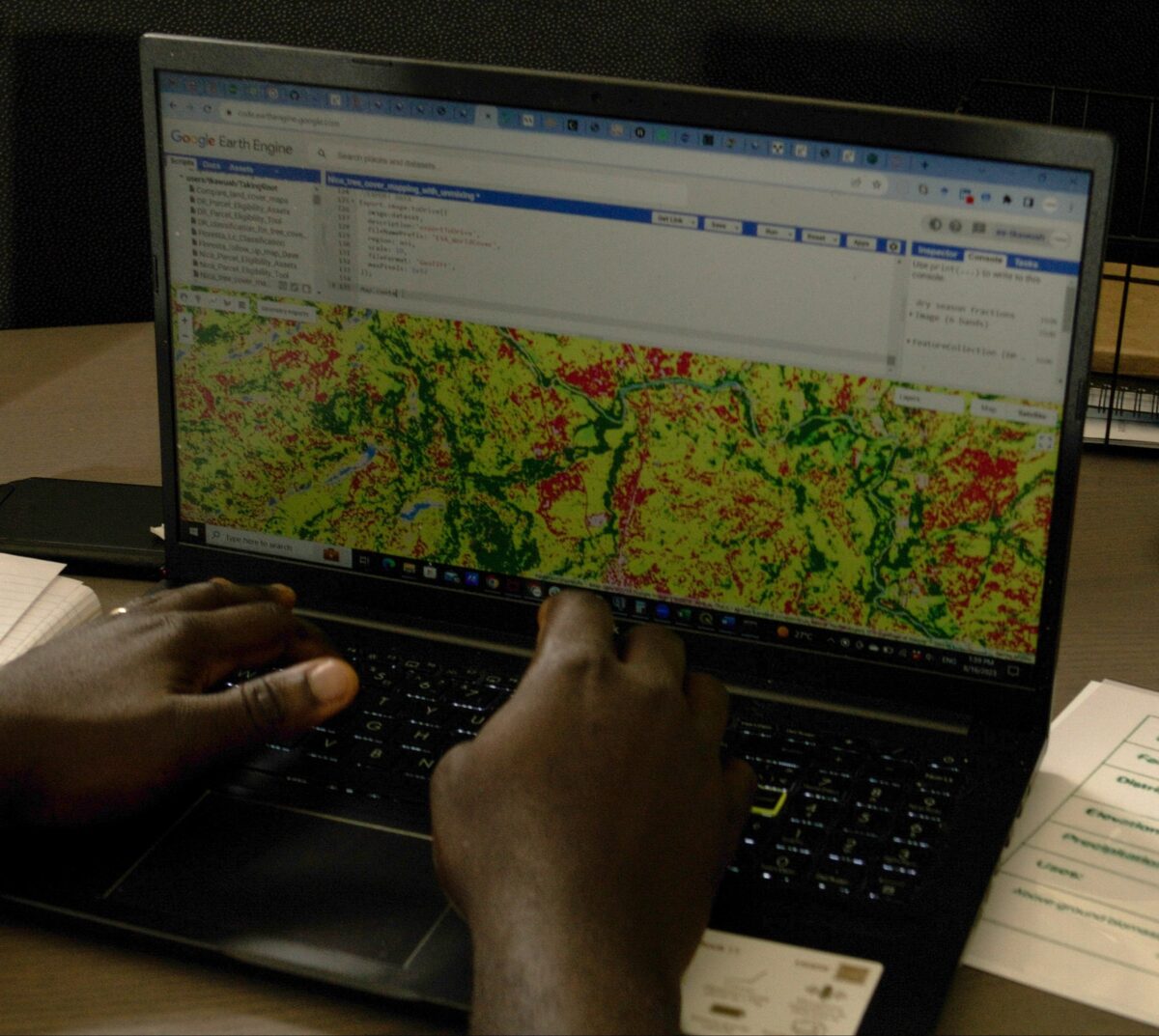
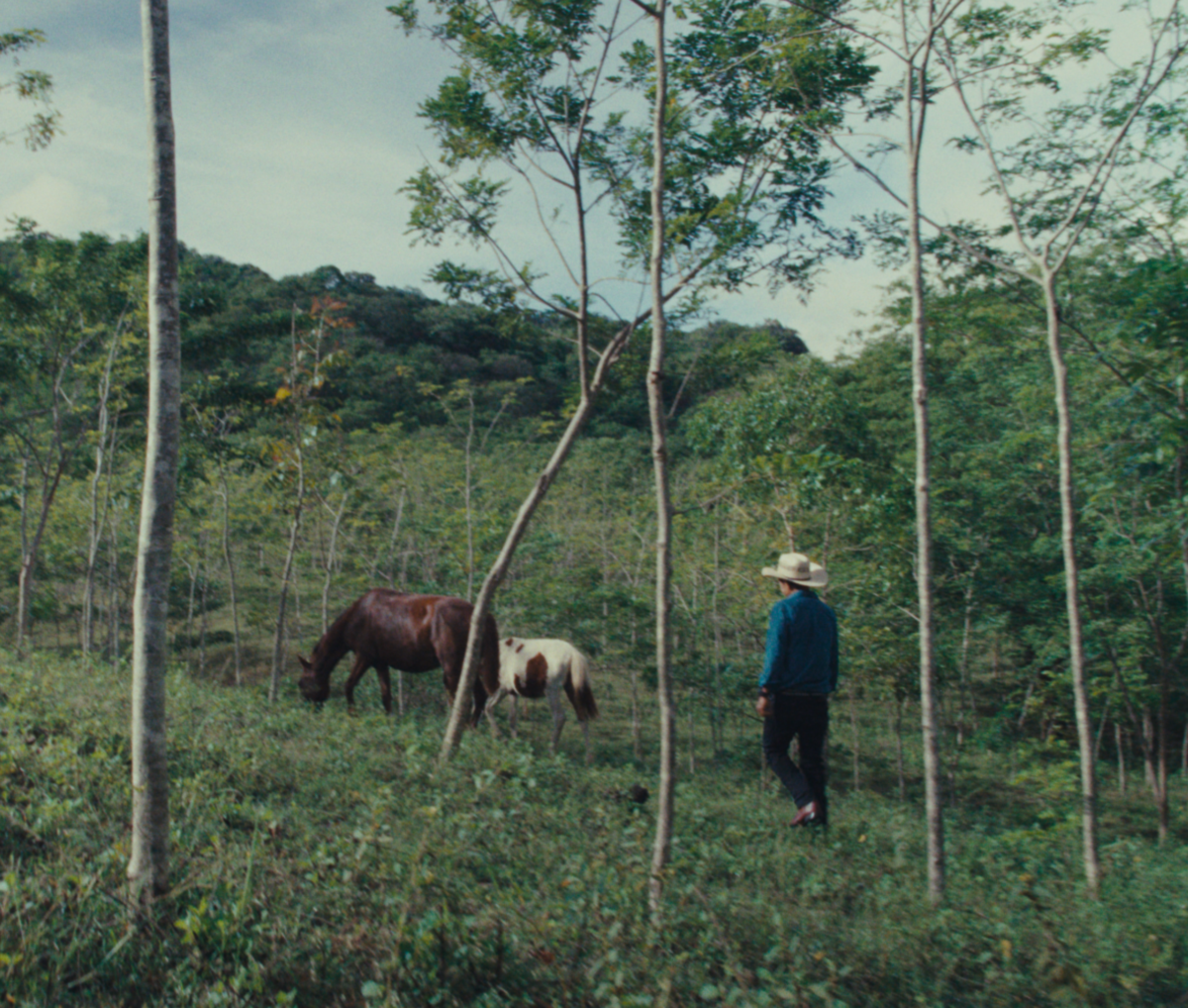
As project developers of high-integrity forest restoration projects, we couldn’t accept this compromise. We needed a system that doesn’t just observe forests — it helps them grow and proves that growth.
That’s why we built Taking Root’s Restoration Intelligence Engine: a model that connects human insight and technology in a continuous feedback loop. This approach ensures every parcel has the best chance of success — and allows us to demonstrate, with confidence and evidence, that forests are truly growing. It’s this combination of field intelligence and digital innovation that has enabled us to restore forests at scale, resulting in more than 4,600 smallholder families restoring over 17,000 hectares of degraded land — and we’re only getting started.
The challenge: scaling without losing sight of quality
Restoring forests across thousands of parcels is not simply a matter of planting trees, a metric that, on its own, provides “no indication of long-term survival” (Mansourian & Stephenson, 2023). True restoration requires years of timed silviculture activities — pruning, thinning, weeding, and maintenance — all tailored to local conditions and species needs.
In our CommuniTree Carbon Program in Nicaragua, for example, smallholder farmers restoring mixed-species parcels follow a silviculture plan that spans their first decade of growth. This includes weeding in the early years to reduce competition, and thinning around year six or seven to prevent overcrowding.
At scale, coordinating, verifying, and adapting these activities becomes extraordinarily complex. Most technologies cannot assess the nuance of local conditions, and field teams alone cannot track thousands of parcels in real time. Without the right intelligence, interventions may be mistimed, efficiencies are lost, and credibility is at risk.
Academic research reflects this same challenge, noting that “there is an urgent knowledge gap surrounding the effectiveness of restoration projects, which can only be addressed by fusing large-scale monitoring and local, site-specific expertise.”
To overcome these barriers, we knew we needed a model that combines the strengths of people and technology — one designed specifically for high-quality restoration at scale, while also integrating remote sensing data for eligibility checks, dynamic baselining, and long-term monitoring.
Our solution: Taking Root’s Restoration Intelligence Engine
The Restoration Intelligence Engine is our technology-driven model for ensuring forests grow — not just in their first year, but over decades. It integrates field teams and digital intelligence in a continuous feedback loop that improves with every cycle.
But we start with people, not algorithms.
1. Ground intelligence from local teams
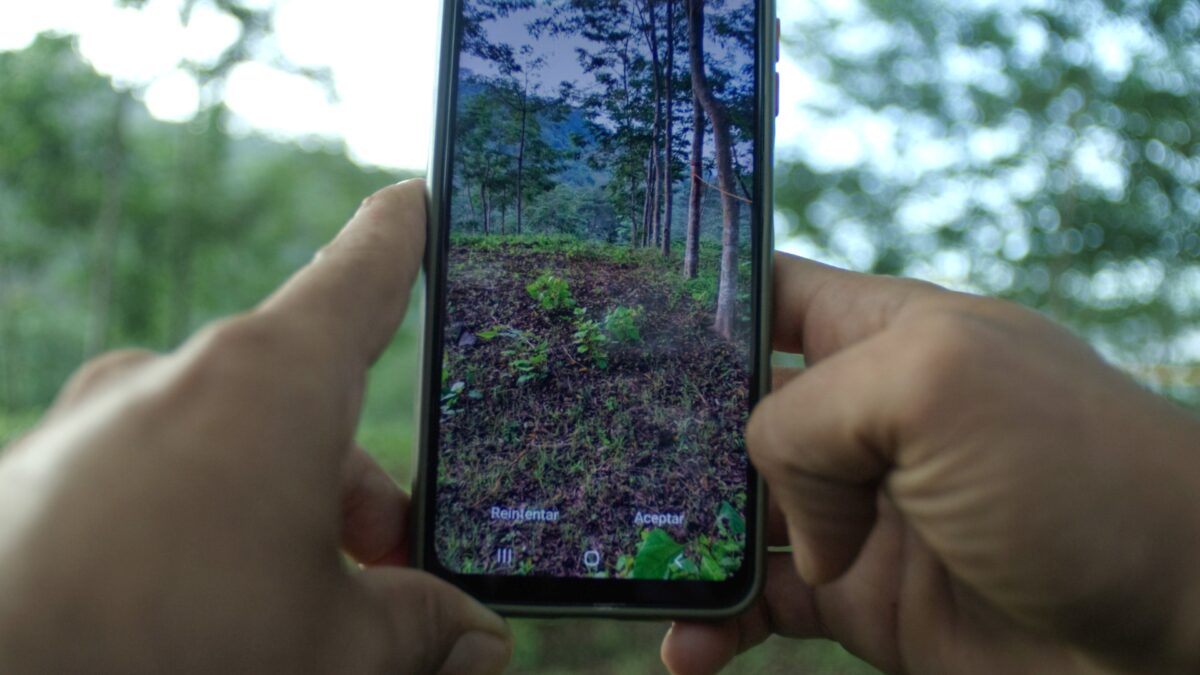
Field teams collect detailed information using our mobile app — capturing tree performance, silviculture activities, and site conditions. Each entry includes photo evidence and metadata such as timestamps and geolocation, enabling verification and auditability. This ground-truthed intelligence is the foundation of everything that follows.
2. Technology makes sense of the complexity
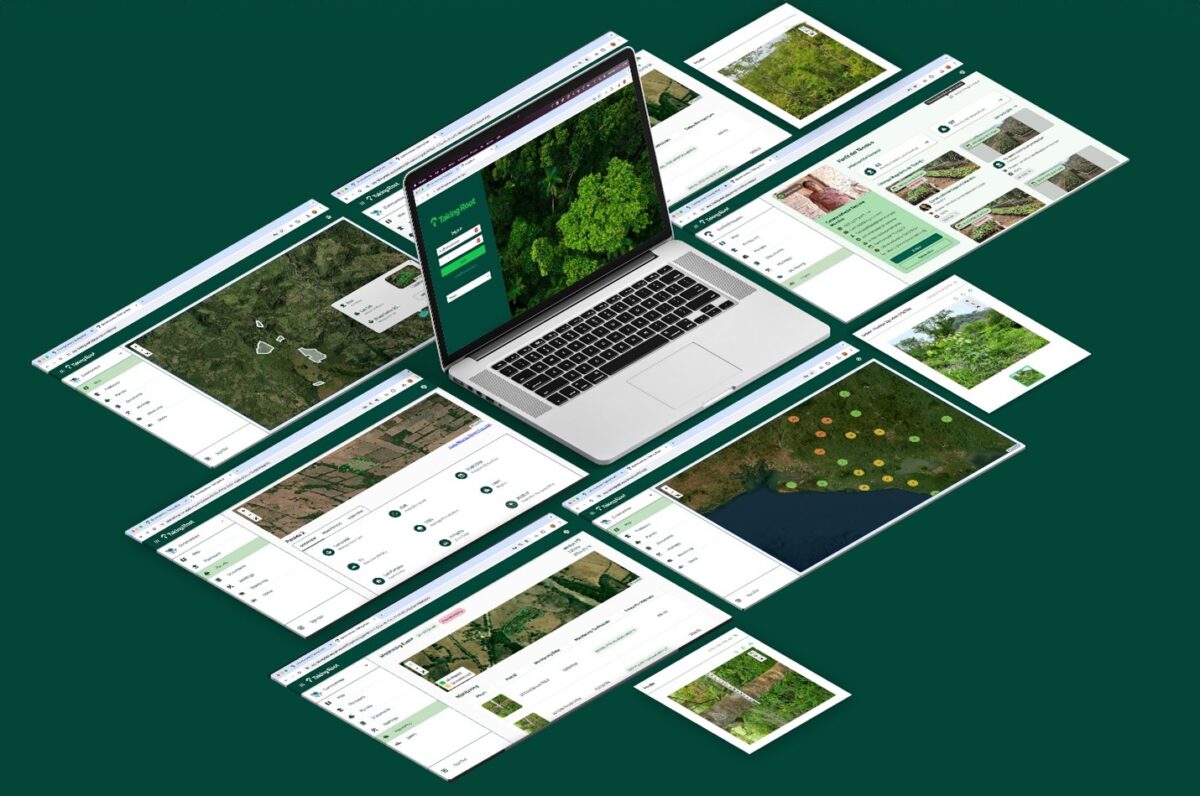
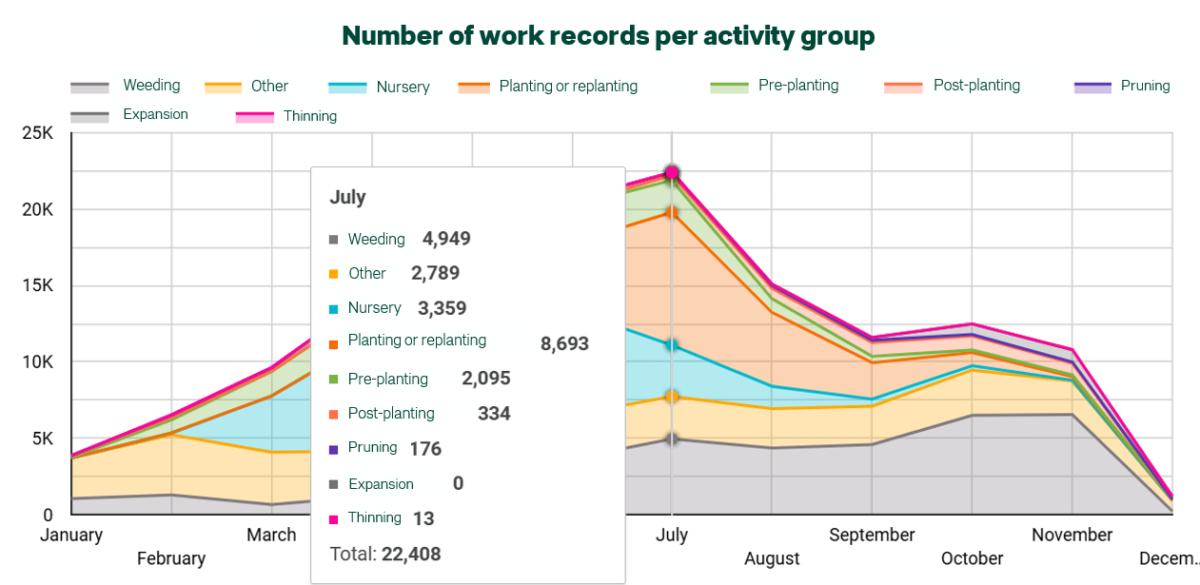
Data then flows into the Restoration Intelligence Engine, where it is validated, aggregated, and transformed into meaningful insights. Dashboards offer a detailed view of thousands of parcels at once — highlighting trends, identifying parcels that need attention, and revealing what’s working well across the project.
3. Insight-driven operations
These insights guide decisions from daily operations to long-term strategy. Field teams use real-time data to determine where to send technicians and identify participants who need support. Meanwhile, management uses trend analysis for strategic planning.
For example, our system identified that planting during 2025 had been particularly successful in Nicaragua’s wetter regions, where conditions supported timely establishment. This insight informed our expansion strategy for future years, allowing us to set higher targets in proven high-performing areas while scaling back in regions with lower results.
As the same review emphasizes, “data collected by monitoring needs to be used for planning and decision-making, especially for adaptive management where successful approaches are replicated and less successful approaches are modified or replaced.”
4. A cycle that strengthens with every iteration
People collect data → technology interprets it → insights guide action → new data improves the system further.
This creates a level of responsiveness that automated tools or remote sensing alone cannot achieve — and it directly enables one of the system’s greatest strengths: transparent, verifiable reporting.
Reporting you can trust
Transparent reporting is essential to producing high-quality, verifiable carbon credits. The Restoration Intelligence Engine maintains a digital record of every parcel, combining field-verified data with remote sensing inputs where appropriate to provide a complete picture of project performance.
This enables clear reporting on key metrics such as tree survival, basal area, and carbon sequestration — all backed by evidence rather than assumptions.
Because every data point is grounded in real-world observations, investors and partners can trust that the information reflects reality. The system not only helps forests grow — it proves that the growth is happening.
What’s next
This approach has enabled us to restore forests across thousands of fragmented parcels while maintaining high quality and traceability. As we scale, we’re pushing the boundaries of what’s possible with restoration intelligence.
Right now, the system helps teams identify where attention is needed. Soon, it will help determine what needs to happen next.
Our engineering teams are developing an AI recommendation engine that will evolve into a push tool that tells teams what action to take and when, ensuring interventions happen at exactly the right moment. By drawing on 15 years of restoration data, silviculture timelines, environmental patterns, and remote sensing datasets, it will help keep every parcel on track from the very beginning.
Even as this technology advances, one thing remains constant: people are central. Human insight and relationships anchor every decision and every tree planted. Technology amplifies that insight — it does not replace it.
Partner with us to restore forests for the long term
By synthesizing multiple data sources, the Restoration Intelligence Engine provides a clear, verifiable picture of forest growth and project performance.
After 15 years of uniting field expertise with digital innovation, we have proven that forest restoration can scale without sacrificing credibility. But the opportunity ahead is far greater. We are losing forests at an alarming rate — yet we have the tools and the knowledge to restore them.
We’re inviting funders and project developers to help accelerate this system — funders who want to advance the next generation of restoration intelligence, and implementers who can apply it in their landscapes and contribute insights that make it even stronger. We are already applying our Restoration Intelligence Engine to our new carbon project in Chile, the Bosques Nativos Chilenos Carbon Project.
If you’re working to scale nature-based solutions — and want a system that actually grows forests, not just monitors them — we’d love to collaborate. Contact us or email info@takingroot.com to explore how we can work together to restore the world’s forests.
Taking Root

Taking Root’s purpose is to accelerate the restoration of the world’s forests. We enable smallholder farmers to grow trees and earn money from the carbon they remove from the atmosphere. Our technology and support make it simple for our reforestation partners to create transparent and robust forest carbon removals. From registering farmers and recruiting land, to monitoring trees grown and the carbon stored over time, we provide the tools at every step of the way to help our partners successfully manage and scale their carbon projects. Recognized for its best practices by the UN, EU and World Economic Forum, Taking Root is connecting thousands of farmers to the carbon market, improving their livelihoods by restoring forests around the world.